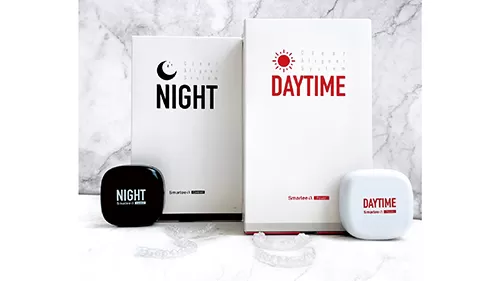
If you have been advised to seek treatment for sleep apnea or persistent snoring, you may have come across the term mandibular repositioning device (MRD). Because the same type of appliance is often referred to as an MRD, MAD, MRA, or a nocturnal mandibular repositioning appliance, it can be difficult to know which option is being discussed. This guide explains the differences, what to consider before choosing one, and how to work with a dental professional to find the most appropriate solution for your condition and daily routine.
A mandibular repositioning device (MRD) is a custom oral appliance designed to gently move the lower jaw forward during sleep. By repositioning the mandible, the device helps keep the upper airway open, which can reduce snoring and improve breathing.
These devices are also commonly called a mandibular advancement device (MAD), a mandibular repositioning appliance (MRA), or a nocturnal mandibular repositioning appliance, with the last term emphasizing nighttime use. MRDs are most often recommended for people with obstructive sleep apnea (OSA) or chronic snoring.
Before selecting a mandibular repositioning device, it helps to think through your specific needs. The severity of your sleep apnea—whether mild, moderate, or severe—plays a major role in determining whether an MRD is appropriate as a first treatment or as an alternative.
Your treatment goals also matter. You may be trying to reduce snoring, manage sleep apnea, or improve sleep quality and daytime alertness. If you have previously tried CPAP and found it uncomfortable, an MRD may offer a more tolerable option.
Lifestyle factors are important too. If you travel frequently, an MRD may be more convenient because it is compact and easy to carry. Your dental and jaw health should also be evaluated, since missing teeth, weak teeth, or temporomandibular joint issues can affect whether you are a good candidate. A consultation with a qualified dentist or orthodontist can help you make a more informed choice.
In many dental and sleep medicine contexts, the terms MRD and MAD are used interchangeably. Both devices work by moving the lower jaw forward to open the airway and reduce obstruction during sleep. The difference is usually one of terminology rather than function.
A mandibular repositioning appliance (MRA) works in a similar way, but it is sometimes described as being more like a mouthguard. It keeps the jaw in a forward position and may also help stabilize the tongue base, reducing the risk of airway collapse. MRAs are commonly used for snoring and mild to moderate OSA.
A nocturnal mandibular repositioning appliance simply highlights that the device is worn at night. Likewise, a mandibular anterior repositioning appliance emphasizes the forward movement of the jaw, while a mandibular orthopedic repositioning appliance places more emphasis on the structural effect of repositioning the mandible, which may also be relevant in orthodontic or joint-related care.
By contrast, tongue-retaining devices (TRDs) work differently. Instead of moving the jaw, they hold the tongue in a forward position to help keep the airway open. These devices may be useful for patients who cannot use jaw-advancing appliances because of dental limitations or jaw conditions.
When comparing MRDs or MADs with CPAP, the main differences involve design, comfort, and practicality. MRDs are small oral appliances that do not require a mask or machine, which makes them more portable and easier to use, especially for people with mild to moderate OSA. CPAP, on the other hand, delivers continuous air pressure through a mask and is generally considered the most effective treatment for severe OSA, although some patients find it difficult to tolerate.
Surgery is another option, but it is usually reserved for cases where other treatments have not worked. It is more invasive and involves greater risk and recovery time. Compared with surgery, MRDs are non-surgical, lower-risk, and easier to adjust over time, which makes them a flexible option for many patients.
The first step in choosing the right mandibular repositioning device is a proper sleep evaluation. A sleep study is needed to confirm whether you have obstructive sleep apnea and to determine how severe it is. That diagnosis will strongly influence which treatment is most appropriate.
After diagnosis, it is important to consult a qualified dentist or orthodontist. These professionals can design a custom device based on your dental structure and monitor how well it works over time. A custom and adjustable device is usually preferred because it offers a better fit, more comfort, and the ability to gradually change jaw position if needed.
Follow-up care is also essential. Regular check-ins allow your provider to fine-tune the device and monitor both effectiveness and oral health. Generic or over-the-counter devices are not customized and may cause discomfort, poor results, or dental problems, so they are not a good substitute for professional care.
Treatment typically begins with a dental evaluation to assess your oral health, followed by a sleep study to confirm the diagnosis and severity of your condition. Once these steps are complete, your dentist will take impressions or digital scans to create a custom device.
At first, there is usually an adjustment period while you get used to wearing the appliance. This is normal, and most patients adapt gradually. Follow-up visits are then used to make fine adjustments and track progress.
With proper care, mandibular repositioning devices can remain effective for several years, although they may occasionally need adjustment or replacement to maintain performance.
One common mistake is skipping the sleep study. Without confirming the severity of your condition, it is easy to choose a treatment that is not well suited to your needs.
Another mistake is using a non-custom device. A generic appliance may not fit properly and can lead to discomfort or dental complications. Some people also ignore follow-up care, even though regular adjustments are important for both safety and effectiveness.
It is also a mistake to focus only on convenience. Professional guidance and device quality matter more than choosing the simplest or most readily available option. Finally, existing dental or jaw problems should always be considered before starting treatment.
Is a mandibular repositioning device effective for sleep apnea?
Yes, it can be effective for many people with mild to moderate obstructive sleep apnea. For severe cases, CPAP is usually more effective, but MRDs can be a practical alternative when CPAP is not tolerated.
How long does it take to adjust to a mandibular repositioning device?
Most people adapt within a few weeks, although the adjustment period varies from person to person.
Can I use a mandibular repositioning device if I have missing teeth?
That depends on how many teeth are missing and the condition of your remaining teeth. A dentist should evaluate whether you are a suitable candidate.
How often should I see my dentist while using an MRD?
Follow-up visits are usually more frequent during the first year and then become less frequent once treatment is stable.
Choosing the right mandibular repositioning device depends on several factors, including the severity of sleep apnea, your oral health, your lifestyle, and your comfort with different treatment options. A structured approach—starting with a proper diagnosis, followed by professional consultation, custom device selection, and regular follow-up—can lead to better results.
With the right guidance, an MRD can be a practical, effective, and convenient way to manage sleep apnea and reduce snoring.

This website is intended solely for qualified medical and dental professionals aged 18 years or older. The products and information contained herein relate to orthodontic clear aligners, which are medical devices. Nothing on this site should be construed as an invitation to sell or an offer to sell such products to consumers or the general public. By accessing this website, you confirm that you are a licensed or certified healthcare or dental professional and that you are at least 18 years of age.