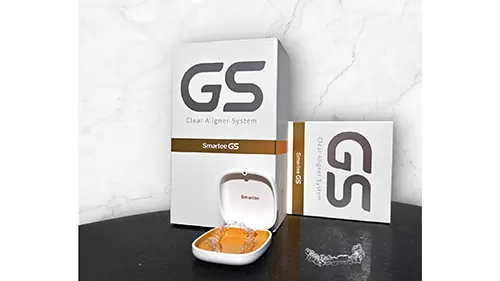
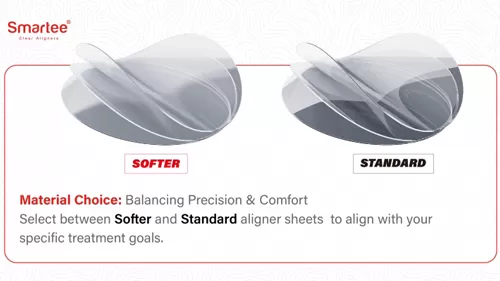
The era of noticeable wire braces for teeth straightening has largely passed. Nowadays, clear aligners offer a highly effective, comfortable, and virtually undetectable option. Beyond their subtle appearance, they can be removed at will, giving patients full flexibility in their eating and drinking habits throughout the treatment process.
Each aligner set is precisely tailored to the individual's teeth, with every intended movement predetermined through detailed planning. In some treatment strategies, small specialized attachments are included—these are bonded to the teeth and collaborate with the aligners to enable more accurate and controlled shifts. This overview explains the key aspects of these attachments and what patients can expect if they are incorporated into their orthodontic care.
For a significant number of patients, clear aligners by themselves provide outstanding outcomes during orthodontic treatment. However, certain more demanding tooth movements may benefit from supplementary support. For example, teeth that are severely rotated, crowded, or misaligned often need extra leverage to align correctly with adjacent teeth. In these scenarios, orthodontists frequently add attachments to complement standard aligner therapy. These compact dental elements deliver improved grip or focused force on particular teeth requiring finer, more precise adjustments.
Attachments vary in design and include shapes like bumps, buttons, engagers, and specialized forms. Some are directly bonded to the tooth surface, while others may be integrated features within the aligners. Different types fulfill specific roles—for instance, buttons can serve as anchors for elastic bands, and bonded attachments commonly enhance traction or help secure the aligners more effectively in place.
Before starting clear aligner treatment, patients usually have an initial consultation with their orthodontist. This visit enables the provider to examine the teeth, discuss aesthetic and functional objectives, and gauge the overall complexity of the case. Drawing from this evaluation, the orthodontist determines if attachments will be beneficial or essential for the treatment plan. Simpler issues, such as minor crowding or small spaces, are frequently managed successfully with aligners alone. Nevertheless, attachments may still be recommended even in less complicated cases to improve treatment efficiency and final results.
The process of bonding attachments is simple and efficient. During the preliminary digital planning stage, sophisticated 3D software models the complete treatment sequence, allowing the orthodontist to pinpoint exactly which teeth need attachments and their ideal positions. Guided by this precise simulation, the doctor marks the designated spots on the teeth and applies the attachments accordingly.
Similar to other elements of aligner therapy, attachments can feel unfamiliar initially because they add small protrusions to the teeth. Many patients experience some temporary mouth irritation, especially when eating without the aligners on. This sensitivity generally fades after a few weeks as adaptation occurs. Others mention slight added resistance when placing or removing new aligner sets, but this snug feeling typically lessens once the recommended wear time for each tray has been met.
Once the adjustment phase passes, the majority of patients find the attachments largely unnoticeable, as if they have become a seamless part of the teeth. Wearing the aligners consistently further reduces any awareness of them, since the smooth plastic fully encases the attachments and shields against any potential friction or soreness.
The primary advantage of clear aligners compared to conventional braces is their low-profile look. Concerns about visibility naturally arise when attachments are mentioned. Reassuringly, attachments are usually matched to the natural tooth color, allowing them to merge almost imperceptibly with the enamel and making them hard to spot by others. Even when present, clear aligners with attachments stay considerably more inconspicuous than traditional metal braces.
One consideration that might affect appearance is whitening the teeth while in treatment. The attachment material does not lighten with whitening products, so it is generally best to delay any whitening until after completion to avoid noticeable contrast.
Removing attachments is a quick and gentle procedure, mirroring the ease of their application. At the end of active treatment, the orthodontist carefully polishes them away with a specialized instrument and removes the bonding agent. This step is comfortable, causes no harm to the enamel, and leaves the teeth looking completely natural with no remnants of the attachments.
If your Smartee clear aligner treatment includes attachments, you now have a solid understanding of their purpose and benefits, allowing you to move forward confidently. These advanced components make it possible to address a variety of orthodontic concerns effectively, including underbites, deep bites, crowding, and more. If clear aligners interest you, find a nearby Smartee provider today. Their skilled professionals are prepared to schedule a consultation, assess your teeth, and support you in reaching the smile you envision!

This website is intended solely for qualified medical and dental professionals aged 18 years or older. The products and information contained herein relate to orthodontic clear aligners, which are medical devices. Nothing on this site should be construed as an invitation to sell or an offer to sell such products to consumers or the general public. By accessing this website, you confirm that you are a licensed or certified healthcare or dental professional and that you are at least 18 years of age.